
Because of the times we are living in, I think that there is an urgency on the minds of people to try to understand as much about end times as we are able. And so that is why I have been doing these posts on different subjects that we should and might want to know about.
This week, I am going to look into the Seven Churches of Revelation.
Who were they? What do we know about them? And maybe, why were they important enough to be included in the last book of the New Testament?
I haven't studied these churches before, so I'll learn alongside you what is known about them.
For today, I am posting the introduction, as it were, from Bibleinfo.com, and then for the next few days, I will include a post about each of the churches, one per day.
With that in mind, please read on:
What Are The Seven Churches of Revelation?
When the apostle John was exiled to the island of Patmos toward the close of his life, he had an extraordinary vision and was told, “What you see, write in a book and send it to the seven churches” (Revelation 1:11).
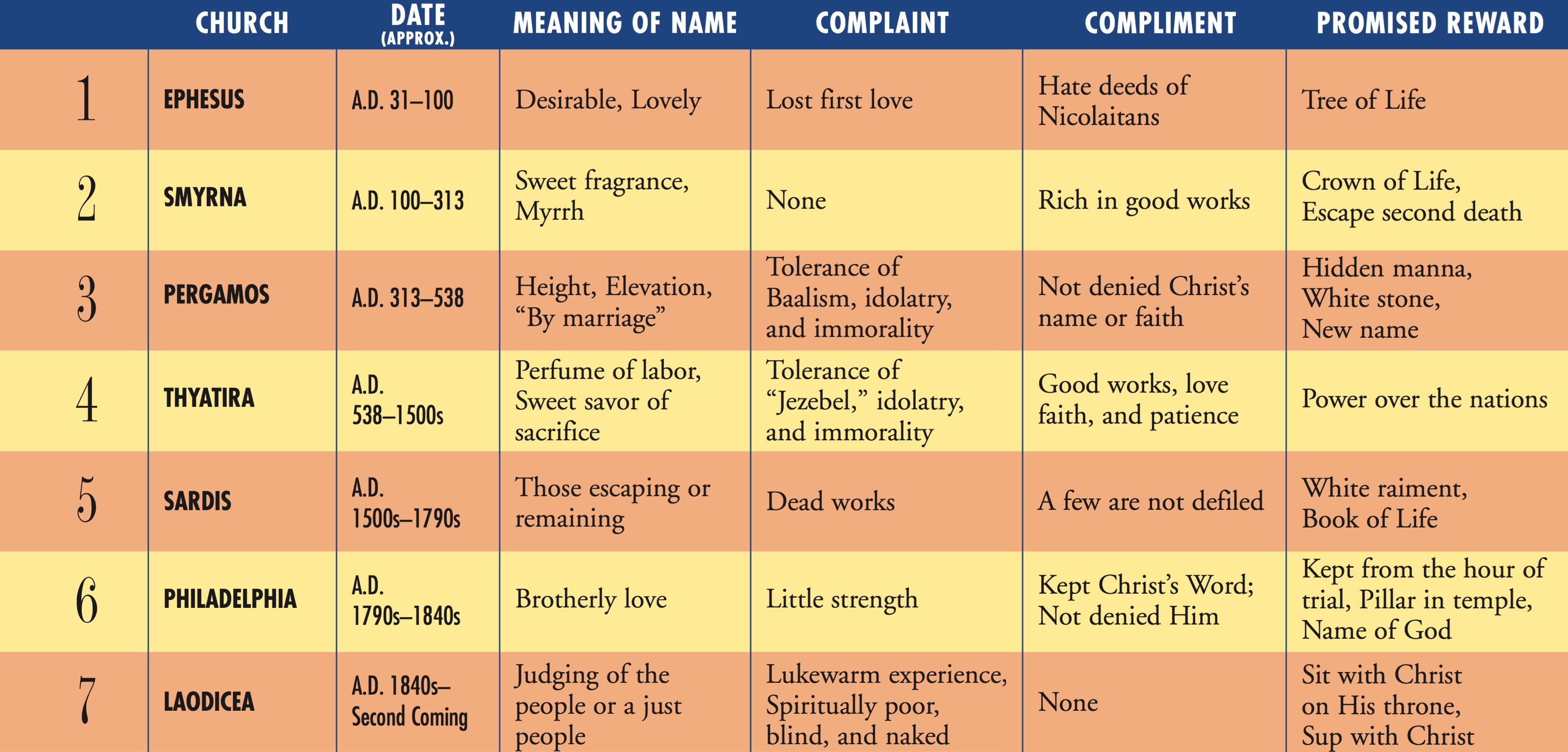
Seven Churches List:
Overview of the Seven Churches
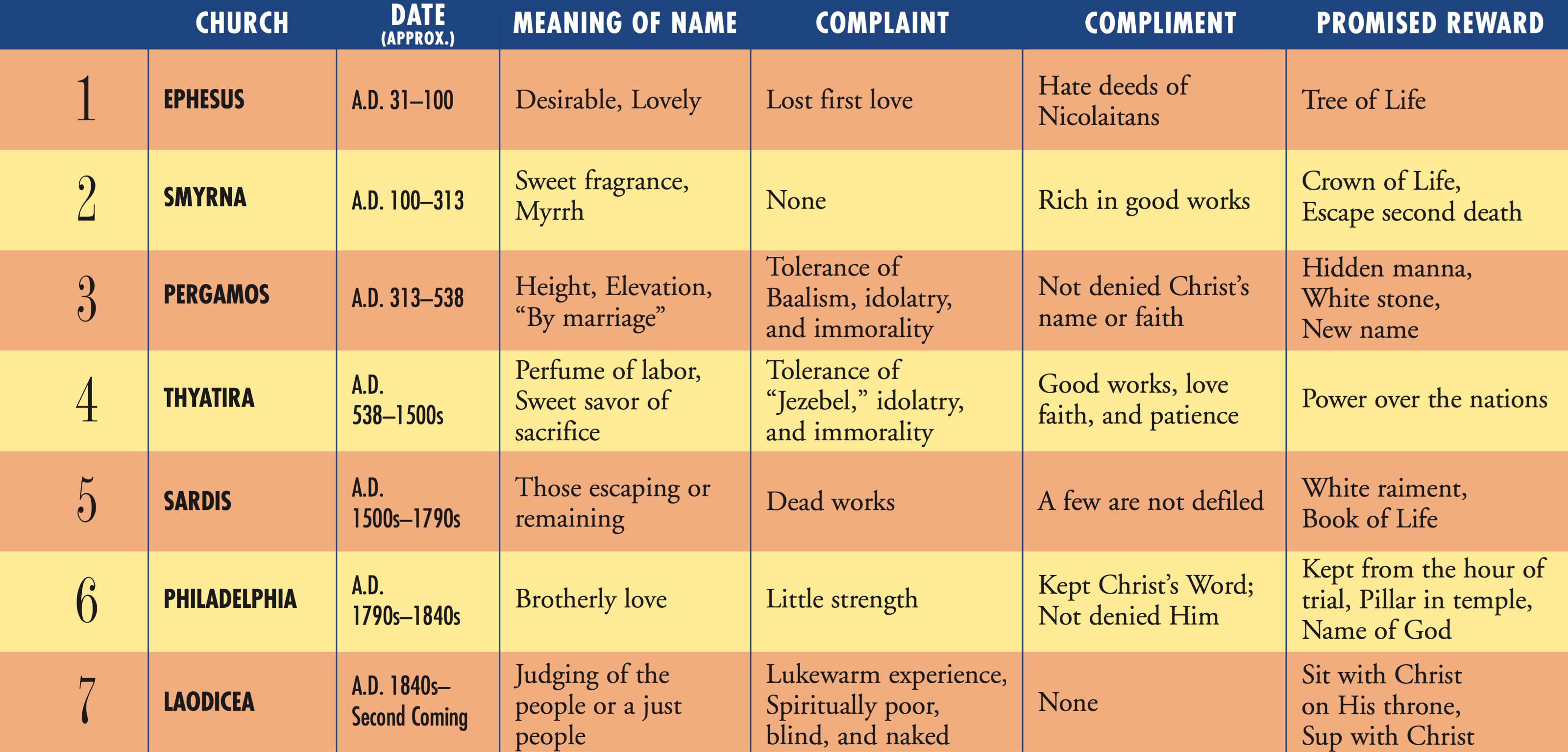
The angel calls each of the seven churches by name: Ephesus, Smyrna, Pergamos, Thyatira, Sardis, Philadelphia, and Laodicea. These were all names of real cities in the Roman province of Asia, also called Asia Minor or present-day Turkey. This was the field of labor of the apostle Paul and others who followed immediately after the apostles.

These seven churches received real messages with warnings addressed to them and real blessings pronounced upon them. But these messages, warnings, and blessings also apply to seven periods of church history reaching from the first advent of Jesus to His second coming and including our present era. The messages are also prophetic for each time period, describing the condition of the Christian church throughout time leading up to the conclusion of the world.
In these messages, the good qualities of each church is pointed out as well as its defects. Admonitions and warnings are given to each, and, finally, an especially appropriate blessing is pronounced.
💗💗💗
4 After this I looked, and, behold, a door was opened in heaven: and the first voice which I heard was as it were of a trumpet talking with me; which said, Come up hither, and I will shew thee things which must be hereafter.
2 And immediately I was in the spirit: and, behold, a throne was set in heaven, and one sat on the throne.
3 And he that sat was to look upon like a jasper and a sardine stone: and there was a rainbow round about the throne, in sight like unto an emerald.
4 And round about the throne were four and twenty seats: and upon the seats I saw four and twenty elders sitting, clothed in white raiment; and they had on their heads crowns of gold.
5 And out of the throne proceeded lightnings and thunderings and voices: and there were seven lamps of fire burning before the throne, which are the seven Spirits of God.
6 And before the throne there was a sea of glass like unto crystal: and in the midst of the throne, and round about the throne, were four beasts full of eyes before and behind. Rev.4:1-6
Revelation 4:1-6 depicts a powerful vision of God's throne room, emphasizing His sovereignty, glory, and the continuous worship of heavenly beings.
Overview of the Passage
In Revelation 4:1-6, the Apostle John is invited to witness a divine vision in heaven. This marks a significant transition from the messages to the seven churches in the previous chapters to a more profound revelation of God's majesty and the events that will unfold in the future.
- The Invitation to Heaven (Verse 1): John sees an open door in heaven and hears a voice inviting him to "come up here." This symbolizes a divine invitation to witness the heavenly realities and the unfolding of God's plan .
- The Throne of God (Verses 2-3): Upon entering, John sees a magnificent throne with someone seated on it, described with the appearance of precious stones like jasper and carnelian. This imagery highlights God's glory and majesty, with the rainbow around the throne symbolizing His covenant and faithfulness .
- The Twenty-Four Elders (Verse 4): Surrounding the throne are twenty-four other thrones with elders seated on them, dressed in white and wearing golden crowns. These elders represent the redeemed people of God, symbolizing authority, purity, and victory in Christ .
- The Sea of Glass (Verse 6): Before the throne is a sea of glass, like crystal. This imagery conveys a sense of peace and purity, contrasting with the chaotic waters often depicted in scripture. It signifies that in God's presence, chaos is calmed, and His holiness is evident .


No comments:
Post a Comment